
HB 194
AN ACT relating to the establishment of faith-based child-care
89th Regular Session
Jan 14, 2025 - Jun 2, 2025 • Session ended
Awaiting Committee Assignment
Bill filed, pending referral to House committee
Committee
Not yet assigned
Fiscal Note
Not available
What This Bill Does
relating to the establishment of faith-based child-care
Subject Areas
Bill Text
relating to the establishment of faith-based child-care
BE IT ENACTED BY THE LEGISLATURE OF THE STATE OF TEXAS:
SECTION 1.01.  This Act shall be known as the Faith-Based
SECTION 1.02.  The legislature finds that:
(1)  the number of foster youth in this state exceeds
the current capacity of state and private child-care facilities;
(2)  religious organizations have historically played
significant roles in community support and child welfare;
(3)  religious organizations can provide a nurturing,
stable environment for foster youth while leveraging community
(4)  a collaborative approach involving religious
organizations, mental health professionals, and community
resources can effectively meet the diverse needs of foster youth;
(5)  incorporating religious organizations into
child-care infrastructure will be beneficial to foster youth in
ARTICLE 2. FAITH-BASED CHILD-CARE FACILITIES
SECTION 2.01.  Chapter 42, Human Resources Code, is amended
by adding Subchapter I to read as follows:
SUBCHAPTER I. FAITH-BASED CHILD-CARE FACILITIES
Sec. 42.301.  DEFINITION.  In this subchapter, "faith-based
child-care facility" means a child-care facility owned and operated
by a religious organization that provides care for children in the
conservatorship of the department for 24 hours a day.
Sec. 42.302.  ESTABLISHING FAITH-BASED CHILD-CARE
FACILITY.  (a)  A religious organization may establish and operate
a faith-based child-care facility as provided by this subchapter.
(b)  Before establishing a faith-based child-care facility,
a religious organization shall:
(1)  develop a comprehensive plan to ensure the
well-being of foster youth cared for by the facility;
(2)  develop a training program for facility employees
and volunteers who will provide care to foster youth at the
(3)  enter into a contract with a licensed mental
health services provider to provide mental and behavioral health
services to foster youth in the care of the facility.
(c)  A faith-based child-care facility established under
this subchapter must be overseen by a committee appointed by the
religious organization establishing the facility that includes:
(1)  a leader of the religious organization;
(2)  two active, participating members of the religious
(3)  a licensed mental health professional;
(4)  a person with experience in child welfare systems;
(5)  a person from an organization that specializes in
(6)  an elected official serving in a municipal,
county, state, or federal office representing the community in
which the faith-based child-care facility is located.
(d)  A member of the committee appointed to fill a roll on
the committee described by Subsections (c)(1)-(6) may fill one
additional role described by Subsections (c)(3)-(6).
Sec. 42.303.  FAITH-FAMILY PROGRAMS.  (a)  A religious
organization that establishes a faith-based child-care facility
under this subchapter shall establish a faith-family program to:
(1)  provide mentorship and support to foster youth at
the facility by building relationships and facilitating
mentorships with members of the religious organization who serve as
a faith-family for the foster youth; and
(2)  encourage individuals serving as faith-family to
become foster or adoptive parents for foster youth at the facility.
(b)  A member of a religious organization participating in a
(1)  host a foster youth in the member's home for
increasing periods of time in accordance with the religious
organization's plan under Section 42.302(b)(1); and
(2)  travel with a foster youth in accordance with
applicable laws for a foster parent traveling with a foster youth.
(c)  The religious organization shall provide any training
required by this chapter or other law for an individual serving as
faith-family to become a foster or adoptive parent of a foster youth
Sec. 42.304.  MENTAL HEALTH SERVICES.  A religious
organization that establishes a faith-based child-care facility
shall ensure that mental health services provided to foster youth
meet applicable standards of professional care.
Sec. 42.305.  FOSTER PLACEMENTS.  (a)  The department shall
ensure the integration of faith-based child-care facilities into
the state's foster care system.
(b)  The department and child-placing agencies may place a
child in the care of a faith-based child-care facility established
Sec. 42.306.  APPLICABILITY OF OTHER LAW; OVERSIGHT.  (a)
Notwithstanding other law, a faith-based child-care facility is
(1)  the licensing requirements of this chapter; and
(2)  the rules and standards that apply to licensed
(b)  The department by rule shall adopt minimum standards for
faith-based child-care facilities that ensure each child's health,
safety, and welfare are adequately protected on the grounds of the
facility, including standards relating to fire safety and basic
cleanliness.  In adopting the standards under this section, the
department shall consider the unique operational frameworks of
religious organizations operating a faith-based child-care
(c)  The department shall periodically evaluate each
faith-based child-care facility to ensure the facility meets the
standards adopted under this section.
Sec. 42.307.  GRANTS FOR FAITH-BASED CHILD-CARE FACILITY.
(a)  Using available funds or private donations, the department
shall establish and administer a grant program to award grants to
religious organizations to establish a faith-based child-care
(b)  The commissioner shall adopt rules to implement the
grant program, including rules governing the submission and
approval of grant requests and the cancellation of grants.
(c)  The department may solicit and accept gifts, grants, and
donations for purposes of this section.
SECTION 3.01.  Sections 42.041(b) and (d), Human Resources
Code, are amended to read as follows:
(b)  This section does not apply to:
(1)  a state-operated facility;
(3)  a facility that is operated in connection with a
shopping center, business, religious organization, or
establishment where children are cared for during short periods
while parents or persons responsible for the children are attending
religious services, shopping, or engaging in other activities,
including retreats or classes for religious instruction, on or near
the premises, that does not advertise as a child-care facility or
day-care center, and that informs parents that it is not licensed by
(4)  a school or class for religious instruction that
does not last longer than two weeks and is conducted by a religious
organization during the summer months;
(5)  a youth camp licensed by the Department of State
(6)  a facility licensed, operated, certified, or
registered by another state agency;
(7)  an educational facility that is accredited by the
Texas Education Agency, the Southern Association of Colleges and
Schools, or an accreditation body that is a member of the Texas
Private School Accreditation Commission and that operates
primarily for educational purposes for prekindergarten and above, a
before-school or after-school program operated directly by an
accredited educational facility, or a before-school or
after-school program operated by another entity under contract with
the educational facility, if the Texas Education Agency, the
Southern Association of Colleges and Schools, or the other
accreditation body, as applicable, has approved the curriculum
content of the before-school or after-school program operated under
(8)  an educational facility that operates solely for
educational purposes for prekindergarten through at least grade
two, that does not provide custodial care for more than one hour
during the hours before or after the customary school day, and that
is a member of an organization that promulgates, publishes, and
requires compliance with health, safety, fire, and sanitation
standards equal to standards required by state, municipal, and
(9)  a kindergarten or preschool educational program
that is operated as part of a public school or a private school
accredited by the Texas Education Agency, that offers educational
programs through grade six, and that does not provide custodial
care during the hours before or after the customary school day;
(10)  a family home, whether registered or listed;
(11)  an educational facility that is integral to and
inseparable from its sponsoring religious organization or an
educational facility both of which do not provide custodial care
for more than two hours maximum per day, and that offers an
educational program in one or more of the following:
prekindergarten through at least grade three, elementary grades, or
(12)  an emergency shelter facility, other than a
facility that would otherwise require a license as a child-care
facility under this section, that provides shelter or care to a
minor and the minor's child or children, if any, under Section
32.201, Family Code, if the facility:
(A)  is currently under a contract with a state or
(B)  meets the requirements listed under Section
(13)  a juvenile detention facility certified under
Section 51.12, Family Code, a juvenile correctional facility
certified under Section 51.125, Family Code, a juvenile facility
providing services solely for the Texas Juvenile Justice
Department, or any other correctional facility for children
operated or regulated by another state agency or by a political
(14)  an elementary-age (ages 5-13) recreation program
operated by a municipality provided the governing body of the
municipality annually adopts standards of care by ordinance after a
public hearing for such programs, that such standards are provided
to the parents of each program participant, and that the ordinances
shall include, at a minimum, staffing ratios, minimum staff
qualifications, minimum facility, health, and safety standards,
and mechanisms for monitoring and enforcing the adopted local
standards; and further provided that parents be informed that the
program is not licensed by the state and the program may not be
advertised as a child-care facility;
(15)  an annual youth camp held in a municipality with a
population of more than 1.5 million that operates for not more than
three months and that has been operated for at least 10 years by a
nonprofit organization that provides care for the homeless;
(16)  a food distribution program that:
(A)  serves an evening meal to children two years
(B)  is operated by a nonprofit food bank in a
nonprofit, religious, or educational facility for not more than two
hours a day on regular business days;
(17)  a child-care facility that operates for less than
three consecutive weeks and less than 40 days in a period of 12
(A)  in which a child receives direct instruction
in a single skill, talent, ability, expertise, or proficiency;
(B)  that does not provide services or offerings
that are not directly related to the single talent, ability,
(C)  that does not advertise or otherwise
represent that the program is a child-care facility, day-care
center, or licensed before-school or after-school program or that
the program offers child-care services;
(D)  that informs the parent or guardian:
(i)  that the program is not licensed by the
(ii)  about the physical risks a child may
face while participating in the program; and
(E)  that conducts background checks for all
program employees and volunteers who work with children in the
program using information that is obtained from the Department of
(19)  an elementary-age (ages 5-13) recreation program
(A)  adopts standards of care, including
standards relating to staff ratios, staff training, health, and
(B)  provides a mechanism for monitoring and
enforcing the standards and receiving complaints from parents of
(C)  does not advertise as or otherwise represent
the program as a child-care facility, day-care center, or licensed
before-school or after-school program or that the program offers
(D)  informs parents that the program is not
(E)  is organized as a nonprofit organization or
is located on the premises of a participant's residence;
(F)  does not accept any remuneration other than a
(G)  does not solicit donations as compensation or
payment for any good or service provided as part of the program; and
(H)  conducts background checks for all program
employees and volunteers who work with children in the program
using information that is obtained from the Department of Public
(20)  a living arrangement in a caretaker's home
involving one or more children or a sibling group, excluding
children who are related to the caretaker, in which the caretaker:
(A)  had a prior relationship with the child or
sibling group or other family members of the child or sibling group;
(B)  does not care for more than one unrelated
(C)  does not receive compensation or solicit
donations for the care of the child or sibling group; and
(D)  has a written agreement with the parent to
care for the child or sibling group;
(21)  a living arrangement in a caretaker's home
involving one or more children or a sibling group, excluding
children who are related to the caretaker, in which:
(A)  the department is the managing conservator of
(B)  the department placed the child or sibling
group in the caretaker's home; and
(C)  the caretaker had a long-standing and
significant relationship with the child or sibling group, or the
family of the child or sibling group, before the child or sibling
group was placed with the caretaker;
(22)  a living arrangement in a caretaker's home
involving one or more children or a sibling group, excluding
children who are related to the caretaker, in which the child is in
the United States on a time-limited visa under the sponsorship of
the caretaker or of a sponsoring organization;
(23)  a facility operated by a nonprofit organization
(A)  does not otherwise operate as a child-care
facility that is required to be licensed under this section;
(B)  provides emergency shelter and care for not
more than 15 days to children 13 years of age or older but younger
than 18 years of age who are victims of human trafficking alleged
under Section 20A.02, Penal Code;
(C)  is located in a municipality with a
population of at least 600,000 that is in a county on an
(D)  meets one of the following criteria:
(i)  is licensed by, or operates under an
agreement with, a state or federal agency to provide shelter and
(ii)  meets the eligibility requirements for
a contract under Section 51.005(b)(3);
(24)  a facility that provides respite care exclusively
for a local mental health authority under a contract with the local
(25)  a living arrangement in a caretaker's home
involving one or more children or a sibling group in which the
(A)  has a written authorization agreement under
Chapter 34, Family Code, with the parent of each child or sibling
group to care for each child or sibling group;
(B)  does not care for more than six children,
excluding children who are related to the caretaker; and
(C)  does not receive compensation for caring for
(26)  a faith-based child-care facility established
(d)  A facility exempt from the provisions of Subsection (a),
other than a faith-based child-care facility established under
Subchapter I, that desires to receive or participate in federal or
state funding shall be required to comply with all other provisions
of this chapter and with all regulations promulgated under this
SECTION 4.01.  This Act takes effect September 1, 2025.
Bill Sponsors
Legislators who authored or co-sponsored this bill.
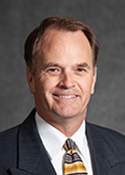
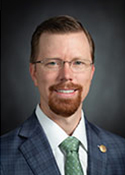
Expert Lobbyists for This Bill
These lobbyists specialize in Day Care, Religion and related subject areas.
Gavin L. Massingill
Jennifer Shelley Rodriguez
Tracy Morehead
Jacob Smith
Nora Del Bosque
Craig Holzheauser
Ky Ash
Clayton Pope
Matthew Conner
John Sepehri
Bill History
Bill filed: AN ACT relating to the establishment of faith-based child-care
Related Guides
Learn more about tracking Texas legislation and working with lobbyists.
How to Read & Track Texas Bills
Master bill numbering, understand legislative language, and learn effective tracking strategies.
Understanding Texas Legislative Deadlines
Navigate the 140-day session with critical calendar dates and filing deadlines.
How Laws Get Made in Texas
Follow a bill's journey from filing to the governor's desk through committees and floor votes.
When Should Your Business Hire a Lobbyist?
Discover the signs that your business needs professional advocacy at the Texas Capitol.