
HB 1425
AN ACT relating to a period of prayer and reading of the Bible or other
89th Regular Session
Jan 14, 2025 - Jun 2, 2025 • Session ended
Awaiting Committee Assignment
Bill filed, pending referral to House committee
Committee
Not yet assigned
Fiscal Note
Not available
What This Bill Does
Allows Texas public school districts and open-enrollment charter schools to implement a daily optional period for prayer and religious text reading. Students and employees can only participate with a signed consent form that waives their right to legal claims, and the prayer/reading cannot interfere with instructional time or be broadcast publicly. Participation is entirely voluntary, and individuals can revoke consent at any time, with the school district's attorney general providing guidance and potential legal defense for implementing the policy.
Subject Areas
Bill Text
relating to a period of prayer and reading of the Bible or other
religious text in public schools.
BE IT ENACTED BY THE LEGISLATURE OF THE STATE OF TEXAS:
SECTION 1.  Subchapter C, Chapter 25, Education Code, is
amended by adding Section 25.0823 to read as follows:
Sec. 25.0823.  PERIOD OF PRAYER AND READING OF BIBLE OR OTHER
RELIGIOUS TEXT.  (a)  The board of trustees of a school district or
the governing body of an open-enrollment charter school that is not
operated by or affiliated with a religious organization may by
record vote on a resolution described by Subsection (a-1) adopt a
policy requiring every campus of the district or school to provide
students and employees with an opportunity to participate in a
period of prayer and reading of the Bible or other religious text on
each school day in accordance with this section.
(a-1)  A resolution to adopt a policy under Subsection (a)
"The (insert name of school district or open-enrollment charter
school) shall adopt a policy requiring every campus of (insert name
of district or school) to provide a period of prayer and reading of
the Bible or other religious text as provided by Section 25.0823,
(b)  A policy adopted under Subsection (a) must prohibit:
(1)  a student or employee of the school district or
open-enrollment charter school from being permitted to participate
in the period of prayer and reading of the Bible or other religious
text unless the employee or parent or guardian of the student
submits to the district or school a signed consent form that
(A)  an acknowledgment that the student or
employee has a choice as to whether to participate in the period of
prayer and reading of the Bible or other religious text;
(B)  a statement that the person has no objection
to the student's or employee's participation in or hearing of the
prayers or readings offered during the period; and
(C)  an express waiver of the person's right to
bring a claim under state or federal law arising out of the adoption
of a policy under this section, including a claim under the
Establishment Clause of the First Amendment to the United States
Constitution or a related state or federal law, releasing the
district or school and district or school employees from liability
for those claims brought in state or federal court;
(2)  the provision of a prayer or reading of the Bible
or other religious text over a public address system; and
(3)  a period of prayer and reading of the Bible or
other religious text from interfering with or being provided as a
substitute for instructional time.
(c)  An employee or parent or guardian of a student may
revoke the person's consent provided under Subsection (b)(1) by
informing the appropriate school administrator, as determined by
the school district or open-enrollment charter school.  An employee
or student for whom consent has been revoked under this subsection:
(1)  may not participate in the period of prayer and
reading of the Bible or other religious text until the employee or
parent or guardian of the student submits to the district or school
a new consent form under Subsection (b)(1); and
(2)  remains bound by the waiver described by
(d)  A policy adopted under Subsection (a):
(1)  must include provisions ensuring a prayer or
reading of the Bible or other religious text is not provided in the
physical presence of, within the hearing of, or in another manner
which would constitute an injury in fact within the meaning of the
United States or Texas Constitution on a person for whom a signed
consent form has not been submitted under Subsection (b)(1) or has
been revoked under Subsection (c); and
(2)  in order to comply with this subsection, may
require that the period of prayer and reading of the Bible or other
(A)  before normal school hours;
(B)  only in classrooms or other areas in which a
consent form under Subsection (b)(1) has been submitted for every
employee and student, which may include an entire district or
school campus if a consent form has been submitted for each employee
(C)  by any other method recommended by the
attorney general or legal counsel for the district or school.
(e)  The attorney general, on request from the board of
trustees of a school district or the governing body of an
open-enrollment charter school, shall:
(1)  provide advice on best methods for a district or
school to comply with the requirements of this section;
(2)  provide a model consent form that may be used for
purposes of providing consent under Subsection (b)(1); and
(3)  defend the district or school in a cause of action
arising out of the adoption of a policy under Subsection (a).
(f)  If the attorney general defends a district or school
under Subsection (e)(3), the state is liable for the expenses,
costs, judgments, or settlements of the claims arising out of the
representation.  The attorney general may settle or compromise any
and all claims under this subsection.  The state may not be liable
for any expenses, costs, judgments, or settlements of any claims
arising out of the adoption of a policy under Subsection (a) against
a district or school not being represented by the attorney general.
(g)  Regardless of whether the  board of trustees of a school
district or the governing body of an open-enrollment charter school
adopts a policy under Subsection (a), this section does not
prohibit a student or employee of the district or school from
participating in prayer or reading the Bible or other religious
text during a period of the school day that is not designated as a
period of prayer and reading of the Bible or other religious text.
SECTION 2.  Section 25.901, Education Code, is amended to
Sec. 25.901.  EXERCISE OF CONSTITUTIONAL RIGHT TO PRAY.  A
public school student has an absolute right to individually,
voluntarily, and silently pray or meditate in school in a manner
that does not disrupt the instructional or other activities of the
school.  A person may not require[, encourage,] or coerce a student
to engage in or refrain from such prayer or meditation during any
SECTION 3.  Not later than six months after the effective
date of this Act, each board of trustees of a school district and
each governing body of an open-enrollment charter school shall take
a record vote on whether to adopt a resolution described by Section
25.0823(a-1), Education Code, as added by this Act.
SECTION 4.  This Act applies beginning with the 2025-2026
SECTION 5.  This Act takes effect immediately if it receives
a vote of two-thirds of all the members elected to each house, as
provided by Section 39, Article III, Texas Constitution.  If this
Act does not receive the vote necessary for immediate effect, this
Act takes effect September 1, 2025.
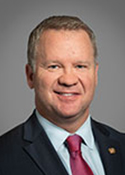
Bill Sponsors
Legislators who authored or co-sponsored this bill.



Expert Lobbyists for This Bill
These lobbyists specialize in Religion and related subject areas.
Haley Cornyn
Gavin L. Massingill
Darlene Brugnoli
Jennifer Shelley Rodriguez
Tracy Morehead
Jacob Smith
Nora Del Bosque
Craig Holzheauser
Ky Ash
Clayton Pope
Bill History
Bill filed: AN ACT relating to a period of prayer and reading of the Bible or other
Related Guides
Learn more about tracking Texas legislation and working with lobbyists.
How to Read & Track Texas Bills
Master bill numbering, understand legislative language, and learn effective tracking strategies.
Understanding Texas Legislative Deadlines
Navigate the 140-day session with critical calendar dates and filing deadlines.
How Laws Get Made in Texas
Follow a bill's journey from filing to the governor's desk through committees and floor votes.
When Should Your Business Hire a Lobbyist?
Discover the signs that your business needs professional advocacy at the Texas Capitol.