
HB 1224
AN ACT relating to required instruction in the Success Sequence for
89th Regular Session
Jan 14, 2025 - Jun 2, 2025 • Session ended
Awaiting Committee Assignment
Bill filed, pending referral to House committee
Committee
Not yet assigned
Fiscal Note
Not available
What This Bill Does
This Texas bill requires public schools to provide instruction on the "Success Sequence" - a framework suggesting students graduate high school, secure full-time employment, and marry before having children - in 6th and 10th grades. The State Board of Education must develop curriculum based on academic studies highlighting the potential economic and social benefits of following these life milestones, with instruction integrated into existing courses like health or economics. Starting in the 2026-2027 school year, students will receive this instruction at least twice before graduation, aimed at providing guidance for personal and professional development.
Bill Text
relating to required instruction in the Success Sequence for
BE IT ENACTED BY THE LEGISLATURE OF THE STATE OF TEXAS:
SECTION 1.  Subchapter A, Chapter 28, Education Code, is
amended by adding Section 28.0025 to read as follows:
Sec. 28.0025.  SUCCESS SEQUENCE.  (a)  In this section,
"Success Sequence" means the following series of evidence-based
sequential milestones shown to help young adults achieve economic
(1)  obtaining at least a high school degree and
acquiring additional training in preparation for entering the
(2)  securing full-time employment; and
(3)  marrying before having any children.
(b)  The State Board of Education by rule shall require that
all students receive instruction in the Success Sequence at least
twice prior to graduation beginning with the 2026-2027 school year.
Instruction in the Success Sequence must be provided to students
(c)  The State Board of Education shall develop curriculum to
be adopted by school districts and open-enrollment charter schools
that provides grade-level appropriate instruction describing the
positive personal and societal outcomes associated with the Success
Sequence.  The curriculum must incorporate evidence drawn from
seminal academic studies on the Success Sequence, including:
(1)  "Creating an Opportunity Society" by Ron Haskins
and Isabel Sawhill of The Brookings Institution;
(2)  "The Millennial Success Sequence" by Wendy Wang
and Brad Wilcox of the American Enterprise Institute and the
Institute for Family Studies; and
(3)  "Assessing the Benefits of the Success Sequence
for Economic Self-Sufficiency and Family Stability" by Hande Inanc,
Ariella Spitzer, and Brian Gosling for the U.S. Department of
(d)  The State Board of Education may partner with
Texas-based nonprofit organizations with an established track
record of providing instruction on the Success Sequence in the
development of the curriculum required by this section.
(e)  A school district or open-enrollment charter school
shall provide instruction to students in grade 6 and grade 10 in the
theory and application of the Success Sequence in a manner
consistent with the requirements of this section, State Board of
Education rules, and the curriculum adopted under this section.
The instruction may be provided as a part of required curriculum in
health, economics, or personal financial literacy.
SECTION 2.  This Act takes effect September 1, 2025.
Bill Sponsors
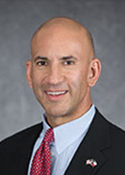
Legislators who authored or co-sponsored this bill.
Bill History
Bill filed: AN ACT relating to required instruction in the Success Sequence for
Related Guides
Learn more about tracking Texas legislation and working with lobbyists.
How to Read & Track Texas Bills
Master bill numbering, understand legislative language, and learn effective tracking strategies.
Understanding Texas Legislative Deadlines
Navigate the 140-day session with critical calendar dates and filing deadlines.
How Laws Get Made in Texas
Follow a bill's journey from filing to the governor's desk through committees and floor votes.
When Should Your Business Hire a Lobbyist?
Discover the signs that your business needs professional advocacy at the Texas Capitol.